Palm Coast Local
Locals Helping Locals

Florida’s Move Over Law: What Palm Coast Residents Need to Know and Why It Matters
- Details
- Written by: Palm Coast Local
- Parent Category: Business Blog
- Category: Government
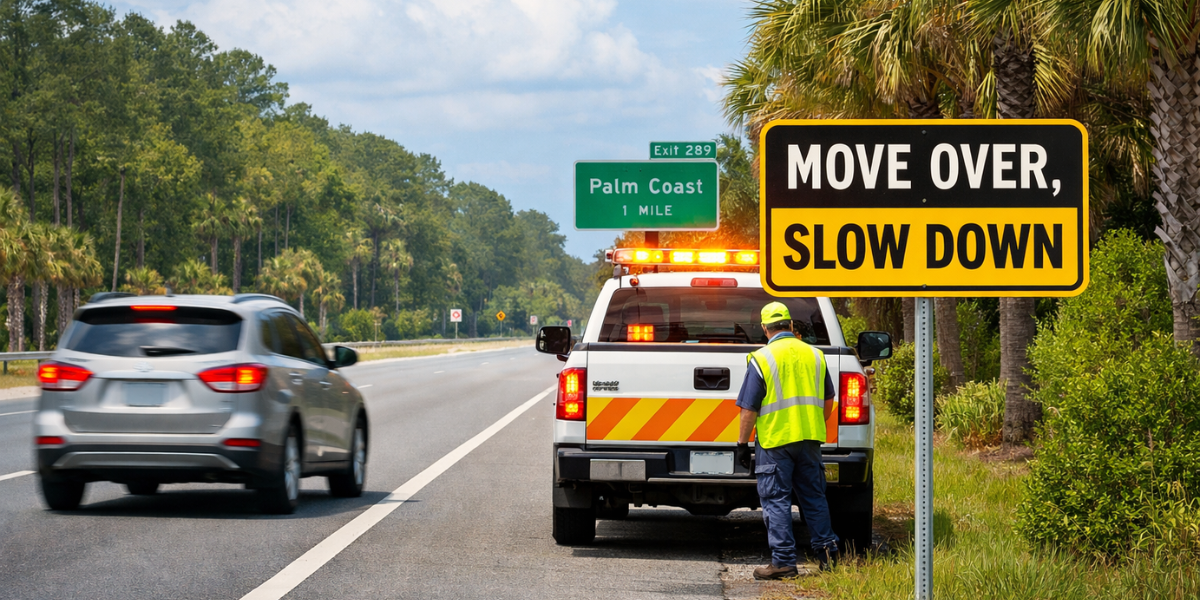
Florida’s Move Over Law: What Palm Coast Residents Need to Know and Why It Matters.
Drivers across Palm Coast and Flagler County are spotting more roadside service vehicles, flashing lights, and safety signs and it’s prompting a fresh look at Florida’s Move Over Law and what it means for everyday travel on local streets and highways.
Palm Coast and Flagler County drivers are being reminded that Florida’s Move Over Law isn’t just a rule of the road, it’s a safety law designed to protect the people who step out of their vehicles to help others, respond to emergencies, or repair disabled cars along busy highways.
Whether you’re commuting to work, heading to the beach, or running errands across Flagler County, understanding how this law works can help prevent accidents, avoid costly fines, and — most importantly — save lives.
What Is Florida’s Move Over Law?
Florida’s Move Over Law requires drivers to slow down and move over one lane when approaching a stopped vehicle with flashing lights on the side of the road.
This includes more than just law enforcement. The law applies to:
-
Emergency vehicles (law enforcement, fire, EMS)
-
Tow trucks and roadside assistance
-
Utility service vehicles
-
Sanitation and maintenance vehicles
-
Disabled vehicles using hazard lights
If you can safely change lanes, you must move over to the lane farthest from the stopped vehicle. If traffic or road conditions make that impossible, you are required to slow down significantly as you pass.
Why This Law Exists
Florida’s highways and local roads see thousands of roadside stops every day. First responders, tow truck operators, and drivers dealing with breakdowns often stand just feet away from moving traffic.
The Move Over Law was created to give them a buffer zone — extra space and time that can mean the difference between a close call and a serious crash.
For Palm Coast and Flagler County residents, this is especially important on high-traffic corridors like U.S. 1, Palm Coast Parkway, and Interstate 95, where vehicles travel at higher speeds and visibility can change quickly.
What Drivers Are Expected to Do
When you see flashing lights or hazard lights ahead:
On roads with two or more lanes in the same direction:
-
Move over one lane away from the stopped vehicle if it’s safe to do so.
On two-lane roads:
-
Slow down to at least 20 miles per hour below the posted speed limit.
If the posted speed limit is already low, you must reduce your speed to 5 mph when passing.
What Happens If You Don’t Follow the Law?
Violating the Move Over Law can result in:
-
Fines and court costs
-
Points added to your driver’s license
-
Increased insurance premiums
More importantly, it increases the risk of serious injury or fatal accidents for people who are already in vulnerable roadside situations.
Why This Matters Locally
Palm Coast is a growing community with more drivers on the road every year. From service trucks helping homeowners to law enforcement responding to calls, roadside stops are a daily reality.
The Move Over Law helps protect:
-
Local first responders
-
Utility workers
-
Tow truck drivers
-
Neighbors dealing with flat tires or vehicle trouble
It’s one of the simplest ways residents can contribute to safer roads — just by paying attention and making a small adjustment behind the wheel.
A Simple Habit That Saves Lives
Many traffic safety experts say the Move Over Law works best when it becomes automatic. Spot the lights, check your mirrors, signal, move over or slow down — and continue safely on your way.
It takes just a few seconds, but it can protect someone’s parent, coworker, or friend who’s standing on the shoulder doing their job or waiting for help.
People Also Asked:
1. Does the Move Over Law apply to regular cars with hazard lights on?
Yes. The law includes disabled vehicles using hazard lights, not just emergency or service vehicles. If someone is stopped on the side of the road with their flashers on, you must move over or slow down.
2. What if traffic is too heavy to change lanes?
If it’s not safe to move over, you are required to slow down well below the posted speed limit while passing the stopped vehicle.
3. Does this apply on city streets in Palm Coast or only highways?
It applies everywhere in Florida — including local roads, city streets, and major highways.
Add comment